Tuesday, August 2, 2022

Lawn Care: How To Kill Crabgrass


Do you have crabgrass on your lawn? It’s not uncommon. This unsightly weed is pervasive and could be taking over your yard right now. Here are some lawn care tips you need to know.

Crabgrass is a summer annual grassy perennial weed that germinates from seeds in the spring, and then lives its entire life cycle in the summer before dying off. Overwintering seeds experience spring’s warm arrival, and the annual cycle continues.

Crabgrass Identification

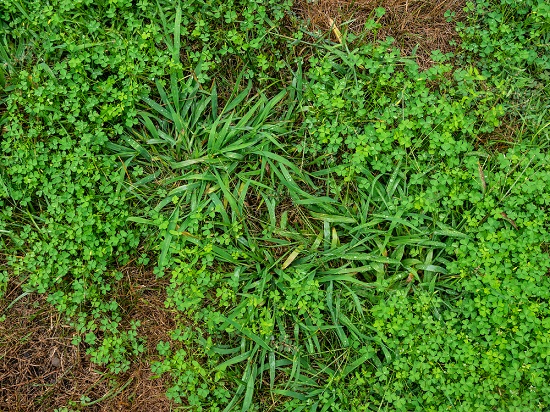
Crabgrass has sharp, pointed, and light-green leaves that are prone to spreading aggressively.

These are the three most common varieties of crabgrass:

  • Smooth (Digitaria ischaemum)
  • Southern (Digitaria Ciaris)
  • Large or hairy (Digitaria sangialis)

They are all pale green and have five flat blades. They thrive in moist, fertile environments in warm weather, especially full sun.

Crabgrass Seeds

Crabgrass seeds can be overwintered as seeds. They germinate once soil and air temperatures reach 55 degrees. Additional seeds may germinate later, up to June. Crabgrass is easily propagated by its prolific seed production. One plant can produce up to 150,000 seeds. They spread easily by wind.

These invasive weeds are very low to ground so mower blades won’t reach them but will stir the seed heads and scatter seeds, accelerating their propagation. If left unmanaged, crabgrass will quickly grow and spread along lawns and cracks in the pavement. Crabgrass won’t survive the first frost but the seeds will continue the cycle when the warm weather returns.

Crabgrass Prevention

Seeds are available for those who have had problems with crabgrass in the past. Pre-emergent herbicides are the most effective and popular way to get rid of crabgrass. Pre-emergents stop crabgrass seedlings from maturing and solve the problem before it starts.

These are some tips for applying the crabgrass prevention:

When it comes to lawn care in Myrtle Beach, you should apply it a few weeks prior to the last frost date in the area. According to the label on pre-emergent, water after application.

To achieve good control, two applications may be necessary. You can submit a second application within 45-60 days of the first one, depending on the label on your pre-emergent.

Pre-emergent herbicides can still be used once crabgrass has been established. However, other strategies should be used to stop the spread of seeds from mature plants.

Pendimethalin and prodiamine are the pre-emergent herbicides. Although corn gluten is an organic option to synthetic herbicides in pre-emergent form, but it isn’t nearly as effective.

Lawn Care Tips: Maintain a Healthy Lawn

The best way to deter crabgrass is with a thick, lush bed of grass.

It is part of the basic ecology. Other grasses would be prevented from entering the area by plant competition with the desirable grass.

Crabgrass thrives when it is exposed to sunlight. Crabgrass thrives in sunlight. A lawn that is too short or has bare patches will make it easy to grow. These low-profile weeds will be outcompeted by a healthy lawn that is taller and free from bare patches, thus reducing their spread.

Proper mowing and regular aeration are key to maintaining a healthy lawn. For the right height for your grass type, consult your local extension agent.

Crabgrass growth can also be controlled by proper watering. Consistent watering will encourage the germination of crabgrass. What you should do instead is to water the turf of occasionally and deeply, letting dry completely between each watering.

What to do if crabgrass is already established in your yard?

Getting Rid of Crabgrass

When they have shallow roots, clumps can be pulled out easily in spring. If they have shallow roots, you can pull them out of your yard easily in spring.

Post-Emergent Herbicides

You can apply post-emergent herbicides at any time during the growing seasons. They disrupt the cellular processes of the plant. They destroy existing plants and not those that are yet to be developed. After applying a post-emergent herbicide, grass seed can be safely sow. Some post-emergent herbicides may delay germination. For more information on timing your planting, please refer to the label.

You should make sure you choose the right post-emergent herbicide for your turf and area. Smaller plants will benefit from post-emergent herbicides. Sometimes it may take several applications to control larger plants.

Like our Facebook page for more great info about lawn maintenance.

Call Conner’s Lawn Care Service now if you need help in maintaining with your lawn and make sure it’s in tip top condition.

Conner’s Lawn Care Service
Myrtle Beach, SC
843-504-4901
http://connerslawncare.com/

Thursday, July 28, 2022

Lawn Care: When To Aerate


It may be time to aerate your lawn if your lawn shows signs of wear and water isn’t reaching the surface. Here are some lawn care tips you need to know.

Backyard soccer games, hundreds upon hundreds of laps by the dog, hot temperatures, and that all-too-competitive father/son badminton match have probably left their mark. The result is thinning grass and soil that feels hard underfoot. You could give your lawn a breather — literally.

Lawn Care: Aeration Tips

Aerating refers to the act of digging holes in your lawn, so that oxygen, water, and nutrients can penetrate deeper. You can also aerate soil that has been hardened from summer heat.

When is it time to aerate your lawn?

Aerating lawns when they are actively growing is the best time to do it. Depending on the climate, this is the best time to aerate.

Cool-season grasses, such as fescue and rye — August through October

Warm-season grasses such as Bermuda or St. Augustine, can be aerated in the warmer months of May through June.

Is my lawn in need of aeration?

Clay soil lawns are more likely to get compacted from heavy foot traffic. Is rainwater able to run off your lawn and not soak in? After a few days of heat, did your lawn become brown? It might be time for you to aerate.

Another way to check is to dig into a square foot of your lawn and see how deep the roots are. It’s time for you to aerate if they reach less than 2 inches deep into the soil.

Before you Aerate

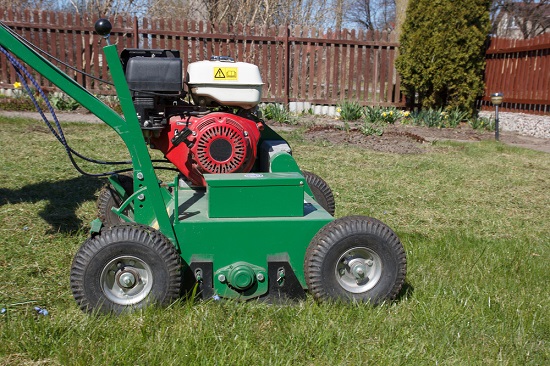
The best aerating machines have hollow, metal tines. These tines penetrate the soil and pull the soil plugs from the lawn. The tines can be made to penetrate the soil deeper through lawn watering at least two days before they are applied.

Give the grass about one inch of water. This is how you measure the watering when you’re doing your lawn care in Myrtle Beach. Put a small tuna container in the middle of your lawn, and then turn on the water. You’ve watered enough when the can is full.

Flags can be used to mark any lawn obstacles or sprinkler heads. These flags will be important to ensure that the machine is operated safely around them so the aerator doesn’t eat them.

Call Conner’s Lawn Care Service now if you need help in maintaining your lawn.

Conner’s Lawn Care Service
Myrtle Beach, SC
843-504-4901
http://connerslawncare.com/
Monday, July 25, 2022

Lawn Care FAQ


Listed below are some common questions about lawn care:

Lawn Care Questions and Answers

Q: How often must I cut my lawn?

A: As a part of a top-quality lawn maintenancecutting with a mower regularly must be observed and the grass must be cut to a height that’s even. Cutting the lawn once every week must be enough.

Q: What is the purpose of raking the lawn?

A: This is performed to get rid of dead grass. A lot of people rake their lawn during the fall season because the leaves start to cover the yard, however, a part of effective landscaping needs lawns to be raked during other seasons too.

Q: Does lawn care include watering the lawn?

A: Not everybody does this, however, it is highly recommended for lawns to be watered so as to avoid having dried and brown grass. When this happens, you may be left with brown areas in your yard.

Q: I have a pet dog and he is wreaking havoc in my yard. Can I still replant my lawn?

A: Lawn care in Myrtle Beach and dogs are not usually compatible, however, they can work together. If you replant your lawn, you should consider using seeds that are designed specifically for areas that get high traffic. Other factors that may worsen the effect that your dog has on your lawn may include a chain that’s dragging the grass and then exposing the dirt surface underneath or when your dog loves to dig.

Q: Can I use harsh chemicals on the lawn to get rid of insects and pests?

A: Using harsh chemicals is wrong for several reasons. In case you have kids who play in the yard, this might not be healthy for them. The same holds true for your pets, who love to dig or eat grass. Apart from that, harsh chemicals do more harm than good to your lawn and are not a friend of nature. Instead of that, try other means of getting rid of pests and insects from your lawn.

If you do not have time to take care of your lawn or maybe just not up to this task, Call Conner’s Lawn Care Service and our team will be happy to give you a quote for their lawn care services.

Conner’s Lawn Care Service
Myrtle Beach, SC
843-504-4901
http://connerslawncare.com/

Tuesday, July 19, 2022

How to apply lawn fertilizer


If your lawn isn’t looking its best, you might think about applying fertilizer. Although this instinct is not always correct, it’s important to remember that details are everything when it comes to lawn care. It is important to consider how fertilizer should be applied to lawns, as well as the best time. You could end up with a burnt lawn or wasted fertilizer if you don’t take these things into consideration.

Find out how to make your lawn look great and be the envy of everyone else with these tips for lawn care in Myrtle Beach.

Lawn Care Tips: When to apply fertilizer

The type of grass that you have will determine the best time to apply lawn fertilizer. The northern United States tends to grow cool-season grasses while the South grows warm-season grasses. Both types of grasses are best treated by lawn growers late in the spring or late in summer. Cool-season grasses require a third application, which is usually done in the fall.

The late autumn feeding is the most crucial for cool-season grasses. Winterizing is more than just preparing your lawn for winter. The nutrients provided will also help to get the lawn ready for the spring.

Before you get started

You can buy the fertilizer in advance and keep it handy so you are ready for when it’s sunny and you have time to apply it. Before you start, make sure to check the forecast.

Measure the area of your lawn. The calculation can be done once, unless your lawn is larger. Keep the calculation for later use. Even if your yard is irregularly shaped, you don’t need any fancy math tools or a lot of mathematical knowledge to calculate the area.

Your lawn can be divided into rectangular sections. Decide beforehand on how big you want your lawn to be, and then use the tape measure to measure the area. Spray paint is used for marking the edges so you know exactly where you are. Continue to do this for each section of the lawn until it is all covered.

Pick a spot to fill your spreader

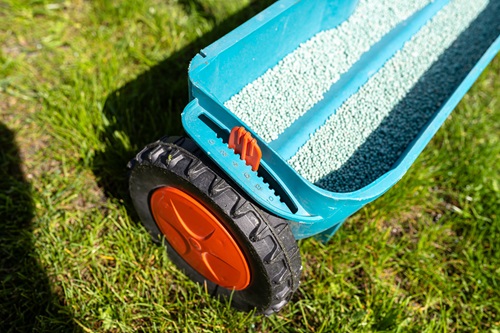
Do not put any spreader out on your lawn. You could end up burning it if you spill any on your lawn. Spread it on a driveway or other hard surface instead.

Check the Instructions for Bag

For application guidelines, check the bag. It will show you where to set your spreader, and how much fertilizer to cover 1000 feet. (Be aware that too much fertilizer can cause lawn damage).

Setup Spreader

Adjust the spreader settings to match those in the instruction manual.

Make sure to fill your spreader

This is where you will need to measure the area of your lawn. If the directions say to fertilize 1000 feet of lawn, but your lawn is only 500 feet in size, then you should fill the spreader with half the amount. You’ll need to double your spreader if you have 2000 square feet.

Perimeter Fertilizer

Begin by applying the fertilizer along the lawn’s edges. Then, walk at a steady pace.

Finalize Fertilizer Application

To avoid any uneven fertilizer application, turn off the spreader after you’ve covered all edges. Turn the spreader off and apply fertilizer to the remainder of the lawn. Moving at an even pace around the perimeter, continue walking. You can check coverage as you move; if gaps exist, make overlapping passes.

The Fertilizer Needs Water

Because rain can provide even coverage, it’s best if the earth follows up with moderate and steady rainfall. If nature isn’t cooperating, you can water the fertilizer yourself.

Call Conner’s Lawn Care Service now if you need professional help in maintaining your lawn.

Conner’s Lawn Care Service
Myrtle Beach, SC
843-504-4901
http://connerslawncare.com/
Monday, July 11, 2022

Lawn Care: How Often Do You Need to Mow?


Mowing your lawn is the most time-consuming lawn care task. Mowing your lawn will make your home look great and help your grass grow at its best.

There are many factors that affect how often you mow. You will need to consider the following factors: rainfall, grass type, fertilization, time available, and how long you can spare. These are some guidelines that will help you determine the best mowing time for your lawn.

Lawn Care Tips

Different Types of Turf

Grasses are green living plants that are often grouped together to make a single entity, called turf. This makes up a lawn. Turf can grow at different rates depending upon the type of grass, climate and amount shade. Some varieties prefer to be cut higher than others, while others prefer to stay closer to the soil. You can determine the height of your turf’s active growth to help you decide how often to mow it to keep it uniform.

Cool-season grasses

Cool season grasses like fescues, bluegrass, and ryegrasses grow quickly in spring and autumn. They will need to get cut more frequently when the rainfall is higher. Broadleaf weeds can be controlled by mowing at the highest height possible during spring months. In the summer heat, grass growth will slow down and will require less mowing.

Warm-season grasses

In states that have hot summers and mild winters, warm-season grasses are more common in the southwest and southern hemispheres. St. Augustine Bermuda, Buffalo, and Zoysia grasses thrive in the heat of summer, but they don’t overwinter like cool-season grasses. These grasses require more frequent mowing during periods of heavy rainfall.

Shade grasses

Many types of grass thrive in sun. It is difficult to grow grass in shade. Although special mixes are available from most retailers that sell grass seed for shade, germination is dependent on the light which makes it difficult to maintain a lawn in shade. These conditions are generally better for cool-season grasses. You might want to mow higher and less often in these areas. A perennial flower bed or moss lawn might be an option.

New lawn

Once a lawn is active, it should be mowed as you would a mature lawn. It is best to not mow too soon as it can cause damage. However, it is fine to start cutting new grass after it has reached the ideal height for its type.

The 1/3 Rule

The stems protect grass blades from damage when it starts actively growing. The stems can be damaged if you cut your grass too low and the grass will die.

The blades will begin to flower after a few months. As new leaves begin to grow, the stem expands to accommodate them. Roots also start to spread. To remove as little as one-third to one-half of the new leaves, raise your mower’s height.

This will prevent you from making a common error when it comes to lawn care in Myrtle Beach: mowing too closely. Cutting the grass below its optimal height can hinder root development, which can lead to weed infestation, drought damage, and injury.

You should mow the grass less often if it grows above the recommended height. You may need to repeat this lawn maintenance process several times, taking a few days off between each pass to let the turf recover.

Call Conner’s Lawn Care Service now if you need expert help in taking care of your lawn.

Conner’s Lawn Care Service
Myrtle Beach, SC
843-504-4901
http://connerslawncare.com/
Monday, July 4, 2022

Lawn Care: When To Apply Fertilizer


You should include fertilizing your lawn in your annual lawn care tasks, which include mowing and trimming. Did you know that fertilizing the lawn at the right time of the day will give it greater benefits? There are specific rules and guidelines that you need to follow, depending on what fertilizer you use and the type of grass.

lawn Care Tips: Why Fertilize Your Lawn

Your lawn will have a nice green color due to nitrogen. The nitrogen helps give your turf a great look by reducing weed problems. NPK ratios are labels that indicate the percentages of nitrogen, phosphorous and potassium used to make a specific fertilizer. You can test your soil by taking it to an agriculture extension office in your area. This will tell you if the phosphorous or potassium levels are adequate. If yes, your lawn won’t require those amendments for many years. Apply nitrogen annually to promote good color and growth.

Different Fertilizer Application Types

There are many options for lawn fertilizers, but most commonly they are applied in liquid or granular forms. Organic fertilizers such as composted manure or organic fertilizers are options too. However, these must be first broken down in the soil before they can be used for lawn maintenance. There are both advantages and disadvantages to liquid fertilizers, but it is important to understand when to use them and when to stop.

When is the best time to apply granular fertilizer on your lawn?

The Granular fertilizer may be either water-soluble or insoluble. This is also known as slow-release. Both have been used successfully on lawns for many years. Water-soluble granular fertilizer must only be applied to grass when it is cool and dry. This fertilizer must be watered in regularly to prevent leaf burn. Slower release formulas are less likely than fast-release formulas to cause damage to grass leaves, so it’s not essential that grass is dry. After spreading, water should be given to allow the granules to get into the soil.

When is the perfect time to add water-soluble granular fertilizer to your lawn?

  • Before a steady rain
  • Mid-morning, after the dew, dried
  • Evenings with low temperature

When is the best time to apply slow-release fertilizer to your lawn?

  • Mornings before temperatures get hot
  • Before a steady rain

Avoid applying any granular fertilizer:

  • After rainfall
  • Prior to a heavy storm
  • The hottest time of the day

When is the best time to apply liquid fertilizer to your lawn?

Liquid fertilizer has one advantage: it is quick and can be applied to your lawn within days. However, liquid fertilizer is not as effective as granular fertilizer. It needs to be applied more frequently and doesn’t last as long. It is important that the grass be completely dry before applying any liquid fertilizer. Any water present on the lawn will dilute it and make it less effective. Granular fertilizers are meant to nourish the roots. However, liquid fertilizer can be used to foliar feed the leaves. If applied when the lawn is still growing, liquid fertilizers can quickly burn the grass.

When is the best time to apply liquid fertilizer to your lawn?

  • Evening with cool temperatures
  • No rain for at least two days
  • Dry grass

When to Avoid the Application Of Liquid Fertilizer

  • If the grass is wet from rain or morning dew
  • Rain is expected
  • The hottest hour of the day

Use Granular Fertilizer or Liquid Fertilizer

You can use both types of fertilizer on your lawn, but not simultaneously. To maintain healthy roots throughout winter, slow release granular fertilizer may be applied on a cool fall day. A liquid application during the early stages of spring growth can strengthen grass leaves and give them a uniform green color.

Call Conner’s Lawn Care Service now if you need professional help in taking care of your lawn.

Conner’s Lawn Care Service
Myrtle Beach, SC
843-504-4901
http://connerslawncare.com/
Tuesday, June 28, 2022

Lawn care: How Often Should You Fertilize Your Lawn?


How often you fertilize your lawn depends on its type, ingredients, quantity, soil texture, nutrient levels and many other factors. You need to consider all factors when deciding when to fertilize your lawn as part of your lawn care routine.

Important Reasons Lawn Fertilization is Important

Lawn fertilizers contain the major nutrients, nitrogen, and potassium in different combinations and concentrations. The lawn fertilizer’s nitrogen content is always highest because nitrogen is the main nutrient that promotes leaf growth. While phosphate is essential for root growth, potassium aids with water and nutrient absorption. However, their numbers are usually lower since most soils already have enough of these two nutrients.

What Fertilizers to Use and How Much

There are three types of lawn fertilizers: organic, synthetic, and liquid water-soluble. Granular slow-release fertilizer, which slowly releases nitrogen into the grass over several months, is most commonly preferred.

A soil test in a laboratory is the only way to determine how much fertilizer your lawn requires. Over-fertilizing the lawn can cause more damage than using zero fertilizer.

Low and High Maintenance Lawn

It is important to decide what kind of lawn you want and how much money and time you can spend. A conventional synthetic lawn fertilizer should be applied at regular intervals to maintain a beautiful lawn. Organic fertilizer can be used if you prefer a natural-looking lawn that is low-maintenance.

Fertilization of Warm Season vs. Cold-Season Grasses

The type of grass determines the frequency and timing of fertilization.

Cool-Season Grasses

Perennial ryegrasses are good cool-season grasses. They thrive in cool temperatures, especially spring and autumn. These grasses need to be fertilized at least twice per year.

After the cool-season grasses have broken their winter dormancy in the spring, you can give your grass until late spring to allow it to grow and replenish its carbohydrate reserves. Before the summer heat sets in, apply slow-release fertilizer.

Cool-season grasses enter survival mode in the summer and fertilizing them is a wasteful and harmful practice that damages the grass. The second fertilization should take place in late summer, or even early to mid-fall. The fall fertilization, unlike the spring application, is intended to increase leaf growth. It is important to time it so that the grass still has several weeks of active growth before the hard frost begins its dormancy. It might not be necessary to fertilize again in the spring after this fall application, but again, only a soil analysis will determine if your lawn requires fertilization and how much.

Warm-Season Grasses

Warm-season grasses– buffalo grass, bermudagrass, St. Augustine grass, zoysia grass, and centipede grass — grow extremely active during the warmer weather. They are fertilized twice per year, just like cool-season grasses. However, the timing is slightly different.

You should apply fertilizer approximately six weeks after the last spring freeze when the grass turns green.

In the fall or late summer, second fertilization is recommended. This does two things. It replenishes the grass’ energy reserves, making it more resilient to heat and winter weeds. A soluble, easily available nitrogen fertilizer is recommended for the second fertilization.

The third application of nitrogen may be necessary for warmer areas with longer growing seasons. This will help to maintain grass growth through the winter and fall. Between applications, wait at least 45-60 days.

When is the best time to fertilize?

It is important to fertilize at the right time of day, not only when it is the best season for lawn care in Myrtle Beach. When the weather is cool, the grass is not too wet from the dew and fertilize in the morning. Apply fertilizer to the grass only when it is dry enough. The fertilizer must not stick to the grass blades.

You should keep an eye on the weather forecast as fertilizer should not be watered within two days of being applied. Fertilize before it rains. This should be a steady, slow rain, and not a storm. Otherwise, the fertilizer will get washed away, and will end up in streams and storm drains that pollute waterway. Alternative to rain, water your lawn with at least 25% of the water it receives after fertilizer has been applied.

Call Conner’s Lawn Care Service now if you need help in maintaining your lawn throughout the year.

Conner’s Lawn Care Service
Myrtle Beach, SC
843-504-4901
http://connerslawncare.com/
Is Fertilizer Safe for Kids and Pets?

Many homeowners wonder whether  fertilizers  are safe for children and pets. Questions like “What if my pet eats fertilizer?” or “How soon c...